
Finding Norfolk County Residents
There is no countywide household list. A Norfolk County residents directory is assembled from records that were made for separate public purposes. A municipal assessor identifies an owner of record and a parcel. The Registry of Deeds connects parties to a land instrument. The Secretary of the Commonwealth offers a current voter-status check. Historical directories, newspapers, and census holdings can place a person or family in an earlier period. Treat a matching name as a lead, then test it against a town, date, address, relative, or document role.
Begin with the kind of information already in hand. An address is strongest with the municipal property roll and the Registry index. A current registration question belongs with the voter-status tool. A family-history question may begin with an old directory instead. A lack of online result is often a limitation of coverage, spelling, or jurisdiction. It is not proof that a person was never connected to Norfolk County.
- Write down the full name, town, street address, and approximate year. Keep postal place names separate from the municipality.
- Use the relevant municipal assessor database for an owner or parcel lead, then save the source date and the label shown.
- Search the Registry by party name, town, date, and document type. Open the instrument rather than relying only on the result list.
- For a current registration question, use the state voter-status route with the exact registration name, date of birth, and ZIP.
- For an older household, compare a directory year with census, newspaper, deed, or archive evidence. Ask the custodian for a narrowly described record that is not online.
Norfolk County Record Custodians
Norfolk County records are spread across county, state, and municipal custodians. The Registry is the countywide land-record office. Assessing data stays with each of the 28 cities and towns, so there is no single county assessor search. Court access is organized by department and division, while the voter-status lookup is statewide and current. Dedham is the practical county research center because the Registry and Superior Court are both on High Street. For a complete address chain, use the Norfolk County street directory route after identifying the municipality.
Municipal Assessors
One office per city or town
Use the Registry directory
Local contact varies
Massachusetts Elections
Statewide status lookup
Local files remain municipal
Contact the local election office
Norfolk County Starts With Towns
Norfolk County has 28 municipalities. That matters before any Norfolk County resident search begins. A postal city, a ZIP, and a historic neighborhood can cross a municipal boundary, while a tax card, voter file, permit, or local vital record is held by a particular town or city. Record the municipality exactly as the source prints it. For old material, preserve village and postal names too, including places such as East Walpole or Sheldonville.
MassGIS provides a useful way to compare a place name with a present boundary. Its community-name material includes postal, historic, neighborhood, and alternate place names. The county’s scale makes that check worth doing before interpreting a Norfolk County residents directory hit as a local record.
MassGIS community-name information helps distinguish the printed place name from the current municipality.
Norfolk County Parcel Search Limits
The official-linked Town of Norfolk Vision portal is an example of the way municipal property systems work across the county, not a countywide roll. Its landing page offers a field selector and query box, with address and owner among the documented modes. The portal says an address query returns only the first ten records and generally leaves out vacant lots. Its separate Street Listing route is the better next step when an address result is incomplete.
Assessor data is a tax-administration snapshot. It can identify an owner of record, a property location, a fiscal-year note, and other parcel details when displayed. It does not establish that an owner lives there or that a mailing address is the property address. The municipal assessor is the source for corrections and official certifications.
| Town of Norfolk control | Useful reading |
|---|---|
| Search selector | Choose a documented mode, such as address or owner. |
| Query box | Try spelling and address variants; save the query used. |
| Street Listing | Browse a whole street, including the route suggested for omitted parcels. |
| Fiscal year note | Read it as an assessment snapshot, not a live ownership guarantee. |
Use the Town of Norfolk property search as a field-level example. The screen below shows the public entry point, whose partial-result behavior is a useful Norfolk County search caution.
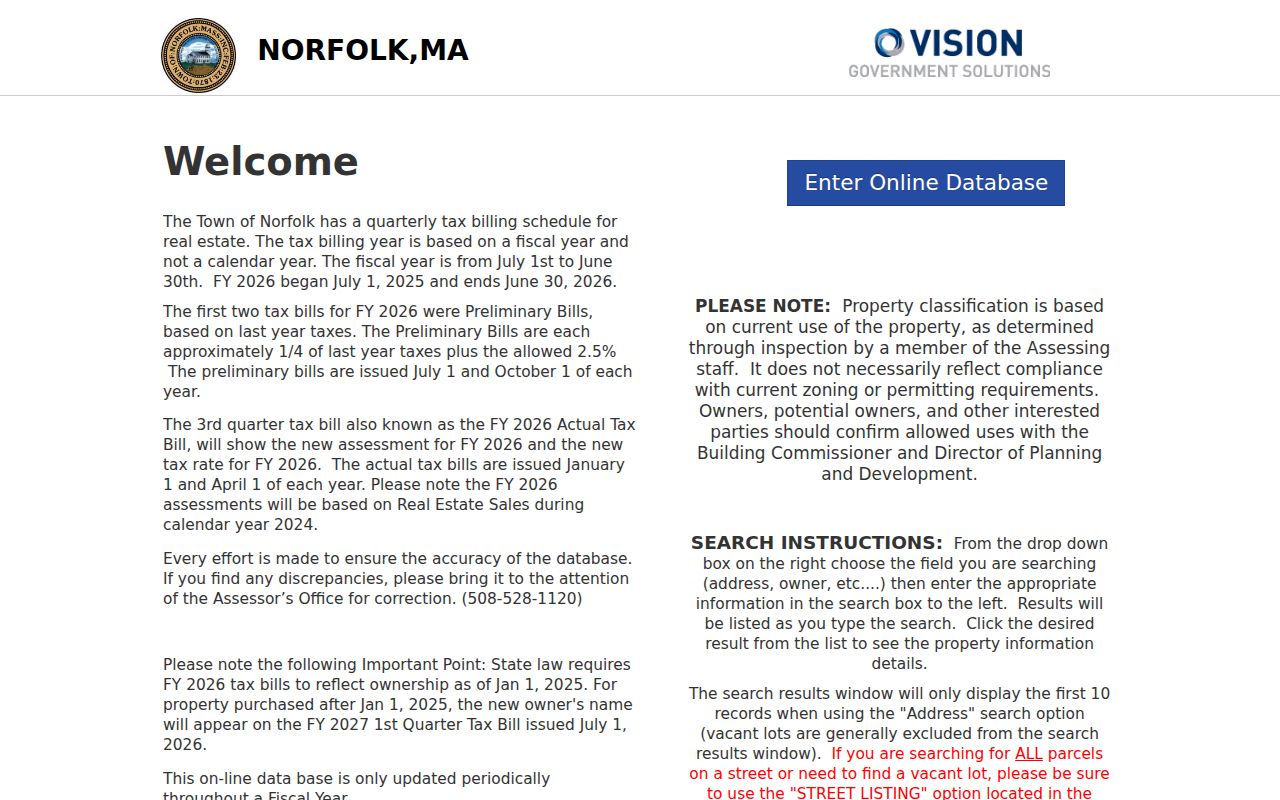
After a parcel lead, compare its situs and mailing labels, then confirm land-record history in the Registry index.
Norfolk County Land Record Trail
The Registry of Deeds has land records from 1793 through the previous day available online, but its research environment separates recorded land from registered land. Recorded instruments use the familiar grantor and grantee trail. Registered land follows the Land Court system, with records from 1900 and an online index described from 1973. The Registry guide says about 80 percent of county property is recorded land and about 20 percent is registered land. A break in one system is a reason to search the other.
A grantor is the party giving an interest in property. A grantee is the party receiving it. An index points to an instrument; it is not the instrument itself. The image viewer labels its free images as not official copies. For a certified or official copy, use the Registry’s own copy route or ask at the counter.
- Parcel
- A defined piece of land used by the assessor and map systems.
- Index
- A searchable list that directs the reader to a record or image.
- Grantor and grantee
- The parties transferring an interest, listed by their legal roles.
- Criss-cross directory
- A directory organized by address instead of by surname.
Note: The Registry address listing is documented as much weaker before 2003, so older work should switch to party names, town, dates, plans, and book or page references.
Current Norfolk County Directory Sources
Current sources are partial by design. A municipal property roll lists ownership and parcel data, not a household census. The voter tool reports current registration status when its required fields match. The Registry index identifies parties to land instruments. Court, license, corporate, and custody systems describe their own records, not a complete Norfolk County residents directory. Use a source only for the fact it actually documents, and use a second official source before treating a name match as the right person.
| Source | Who It Lists | Keeper | Access |
|---|---|---|---|
| Municipal tax roll | Owners of record and parcel data | City or town assessor | Portal or local office |
| Voter status | Current registration information | Secretary and local election office | State lookup, local-file request |
| Land-record index | Parties to recorded instruments | Registry of Deeds | Free research view, copy route |
| MassCourts docket | Public case-party information | Massachusetts Trial Court | Online search and clerk file |
| Official license or entity search | Regulated license or filing affiliation | Commonwealth agencies | Public online search |
An address and a date are good disambiguators. When the goal is one person rather than a household or parcel, the Norfolk County resident lookup route uses the same evidence in a name-first order.
Norfolk County Voter Status Records
The Secretary of the Commonwealth’s voter-status route is a current-registration tool, not an archive of every former voter. It asks for first name, last name, date of birth, and ZIP. Exact registration spelling matters, and the official tips advise trying a previous ZIP after a recent move. A new registration can take two to three weeks to appear. A local election office, rather than the statewide status page, is the place to ask about a paper or electronic voter file.
Protected voters and the Address Confidentiality Program are not gaps to work around. Massachusetts also limits the public display of protected voter information. Do not reconstruct, share, or pursue a protected person’s location. Public records support personal, lawful research only.
Norfolk County Court and Vital Checks
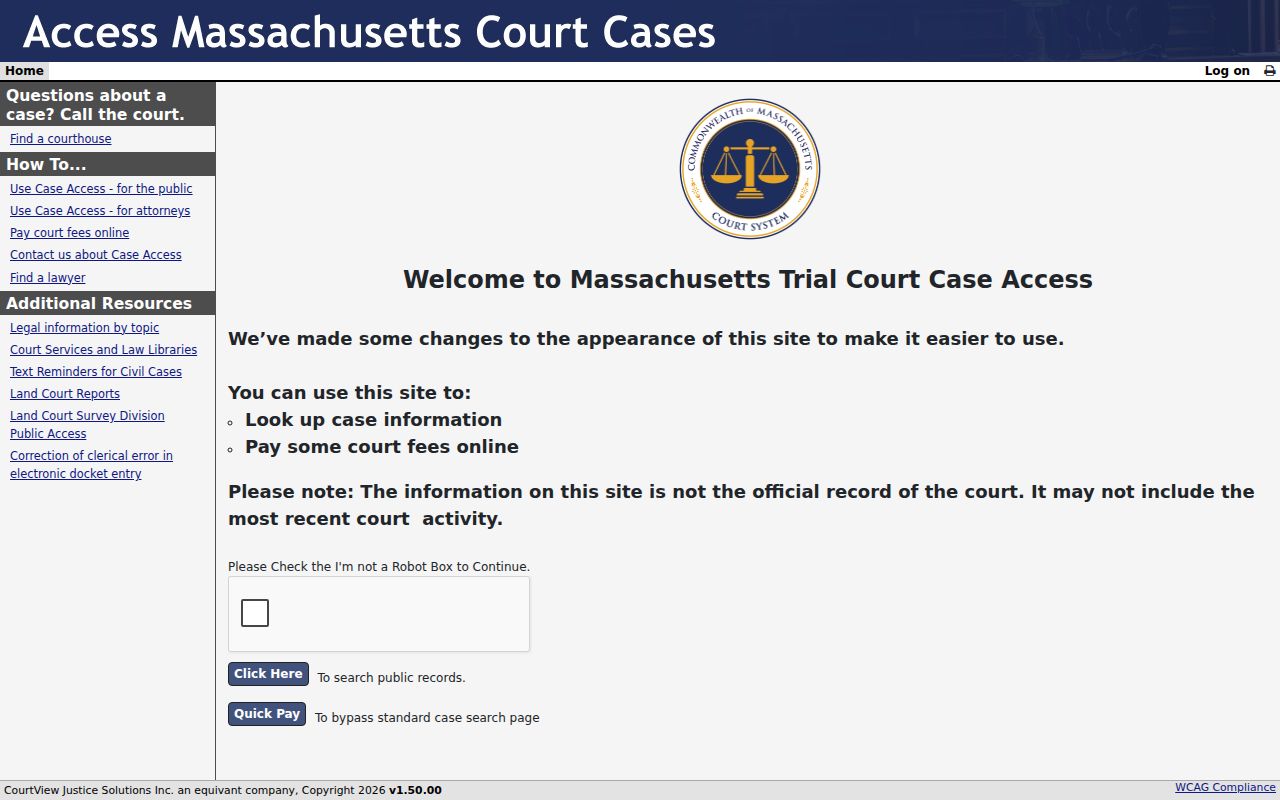
MassCourts can help separate similar names when a public case exists. Its Name tab is described as civil-only in the official instructions. Search fields include court department, division, location, and name controls, while case-type searches use a limited date range. The result display is not the official file. Older case material or restricted records require the appropriate clerk or Register, and the portal requires CAPTCHA.
MassCourts search instructions identify the public docket steps shown here.
For vital records, there is no browseable official index online. The Massachusetts order route requires subject and event details, identity or eligibility documents when needed, and payment. Birth and marriage access is generally governed by a 90-year public rule, while death records use a 50-year rule, with further statutory restrictions for protected categories.
Massachusetts vital-record ordering explains the online, phone, mail, and in-person routes.
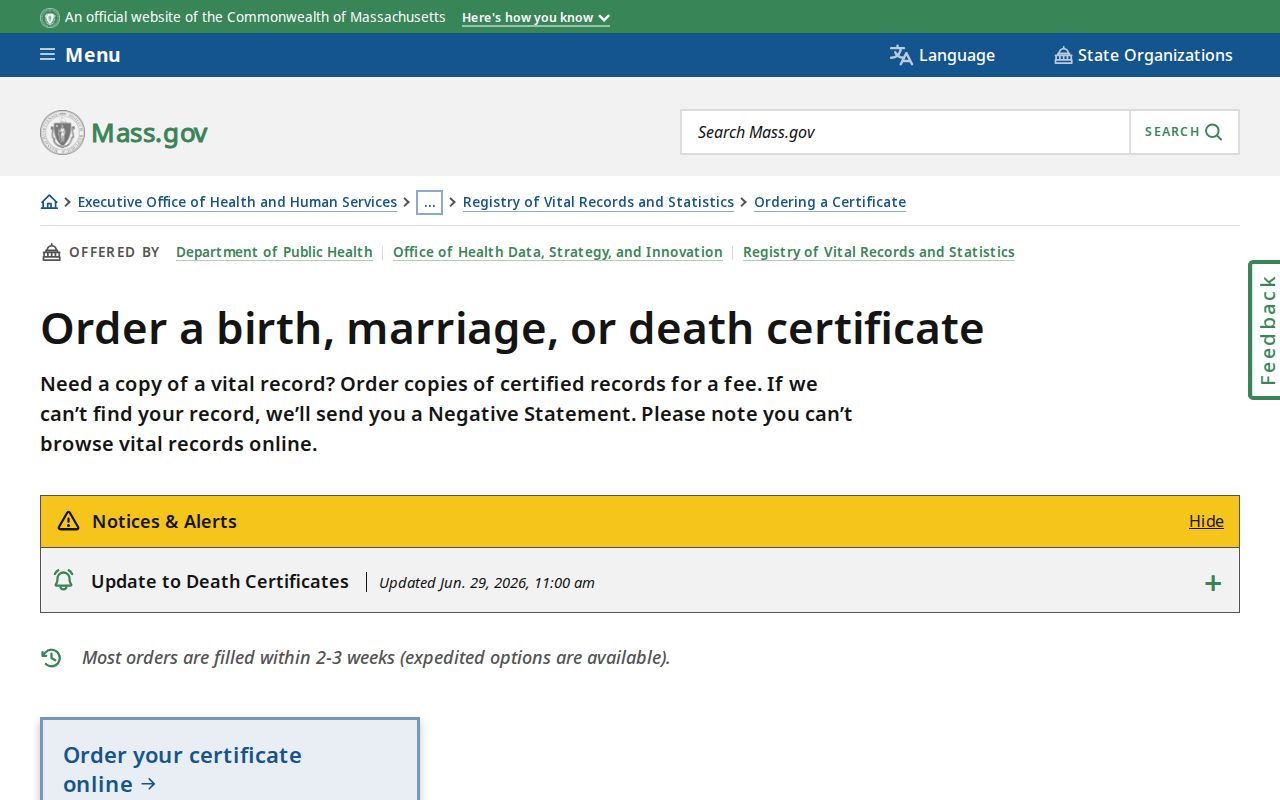
The order screen is a request path, not evidence that a record is public or that a name match identifies the correct person.
Norfolk County Official Name Checks
Some searches are useful confirmation clues, with narrow scope. The Corporations Division supports entity name, officer name, identification number, and filing-number searches. An officer appearance can show an affiliation, but it does not prove residence. The occupational-license search supports individual or business fields such as name, city, state, ZIP, board, license type, and number. A name difference can reflect a spelling, board, or name-change issue.
Start with the Massachusetts corporation search when a legal entity name is known.
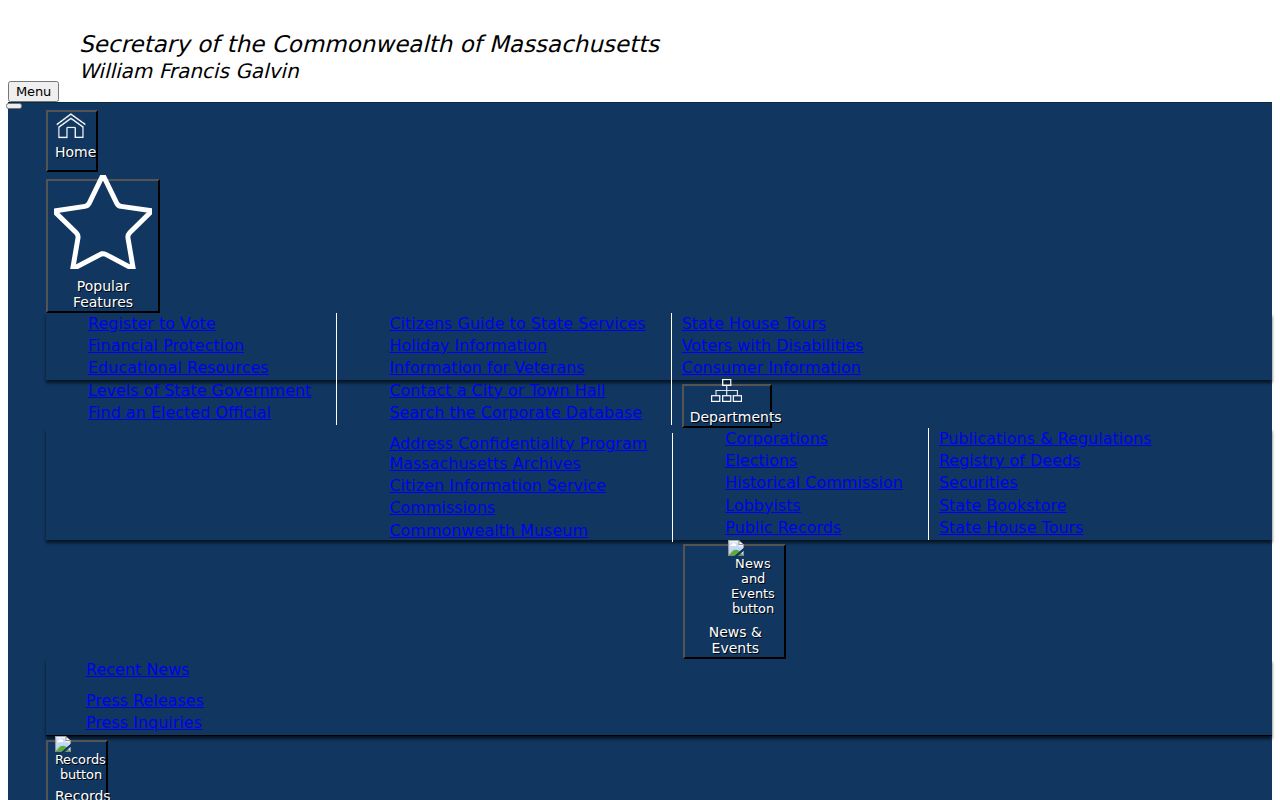
Use official filings as a specific affiliation record, then check dates and roles before drawing any broader conclusion.
The Massachusetts occupational-license search documents its separate individual and business search options.
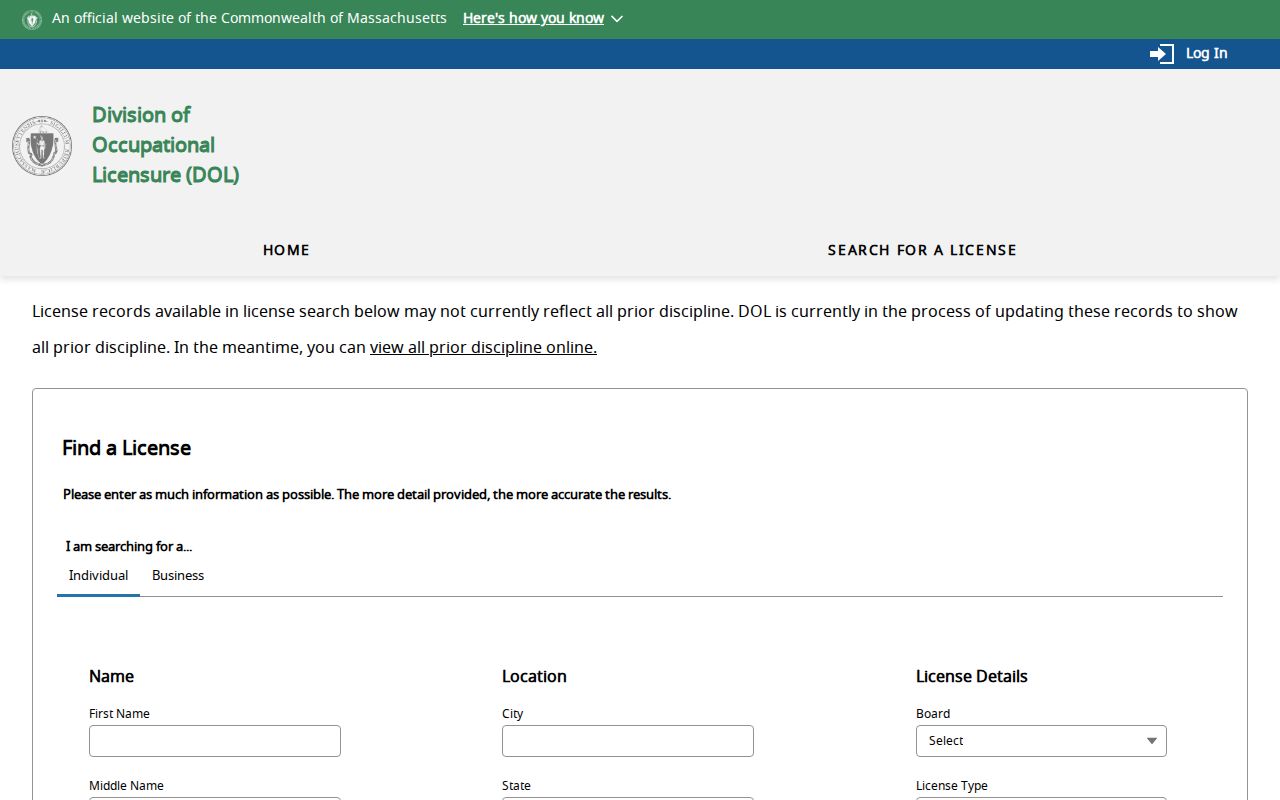
Its result screen is best used to verify the particular license record, not to build a broad list of people.
Norfolk County Custody Search Scope
Massachusetts directs state-prison searches through VINELink, using a full name or commitment number, and provides a phone route. That source covers the Massachusetts Department of Correction, not a general county-custody list. The research did not locate an official countywide Norfolk jail roster. Federal Bureau of Prisons records are a separate source and cover 1982 to the present; a listed release date may not be current.
Massachusetts DOC and VINELink guidance explains the state route and its boundary.
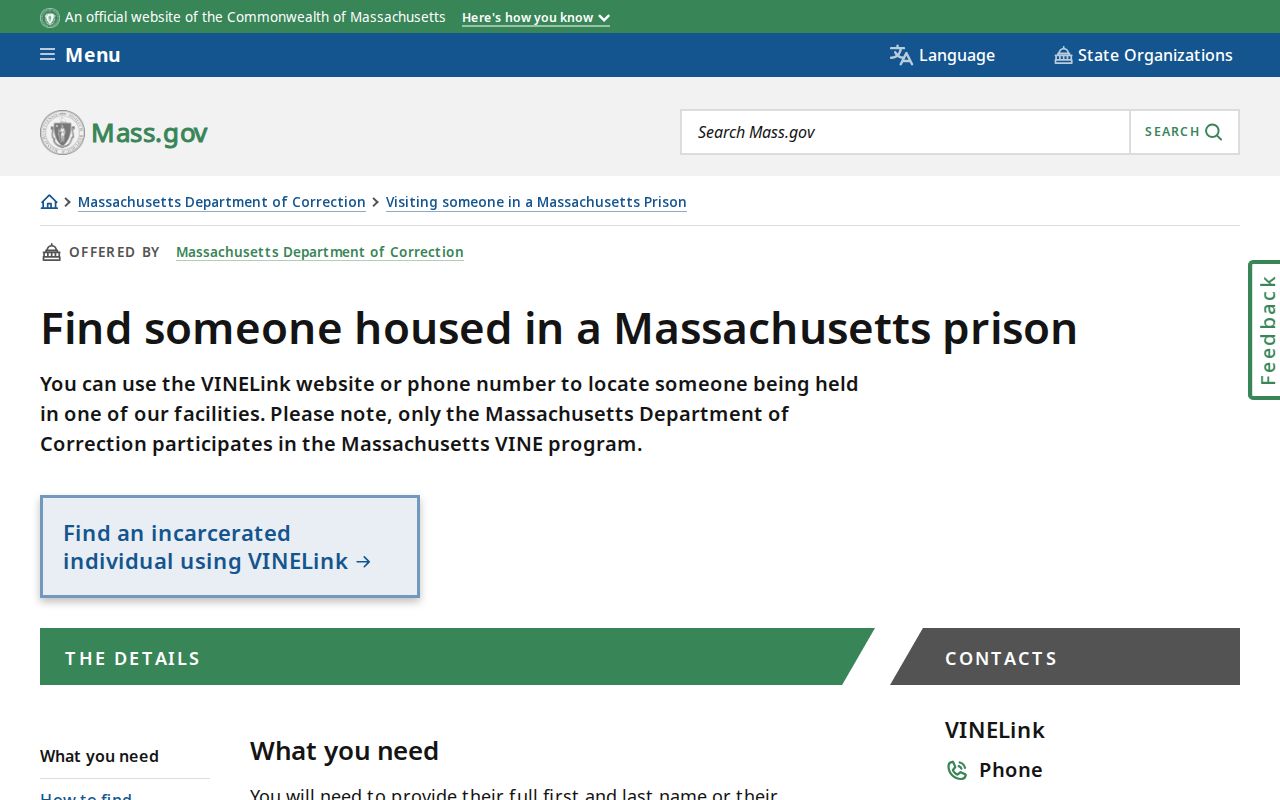
A no-match from a custody locator should be recorded as a result of that system’s scope, not as a statement about a person.
Norfolk County Historical Directories
Historical Norfolk County directories turn a name into a time-stamped household clue. The digitized 1890 Wrentham and Norfolk volume includes resident, street, business, town-officer, institution, and local-history material. Dedham Museum holdings add newspapers, maps, local manuscripts, family collections, and a Norfolk County census collection. State Library and Archives resources supply a second route when a town collection is incomplete.
The State Library genealogy guide is a useful starting point for directory, census, newspaper, Archives, and RVRS holdings.
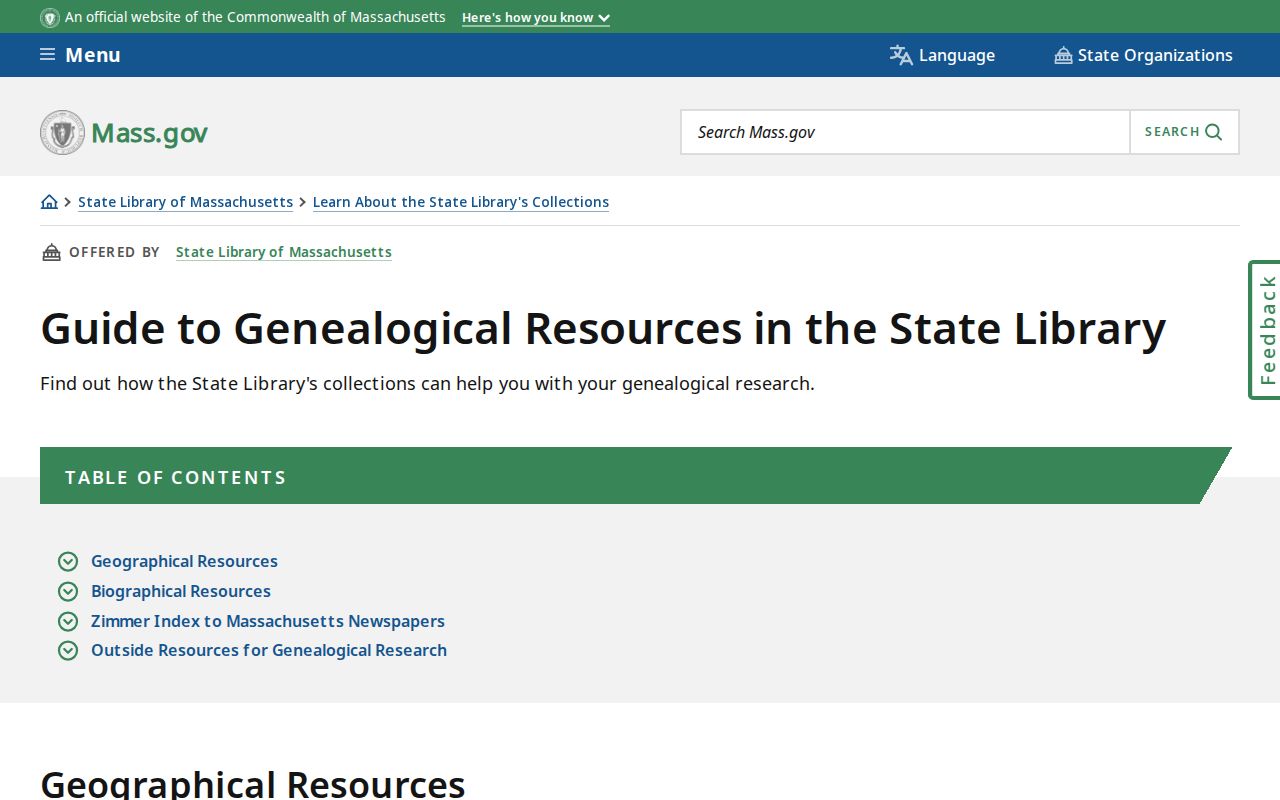
Pair a directory entry with a deed, census, obituary, or newspaper notice. The full shelf-by-shelf method belongs on the Norfolk County Directory Book page.
Norfolk County Privacy Boundaries
Not every requested record is public. Court files can be impounded. Vital records may be restricted by age, relationship, adoption, unwed-parent, Social Security, or other statutory rules. Motor-vehicle data is limited by federal and state rules. Massachusetts also has an Address Confidentiality Program and confidential voter registration. These boundaries protect people who need their location withheld.
When a Registry record or administrative file is not in the public index, a narrow request can be more effective than a broad demand. The Registry request form asks for contact information and a request summary; its Records Access Officers can explain the response route, redaction, and reasonable-fee process.
Norfolk County Residents Directory History
Norfolk County was incorporated in 1793, and the Registry’s first land records already span communities including Milton, Walpole, and Bellingham. The records remain countywide in some systems and municipal in others. That distinction matters because “Norfolk” can mean the Town of Norfolk or the county. Preserve the town in every search note and source citation.
The Registry’s recent genealogy outreach describes about 13.1 million land records and more than 42,000 Registry books. It also promoted an active Genealogy Research and Resource Center. Those numbers are a useful measure of the land-record shelf, but a search still needs a precise town, time period, and record type.
Note: Old address research is strongest when the directory’s printed place, the modern municipality, and the land-record town are kept as separate fields.